



Choosing materials means choosing consequences.
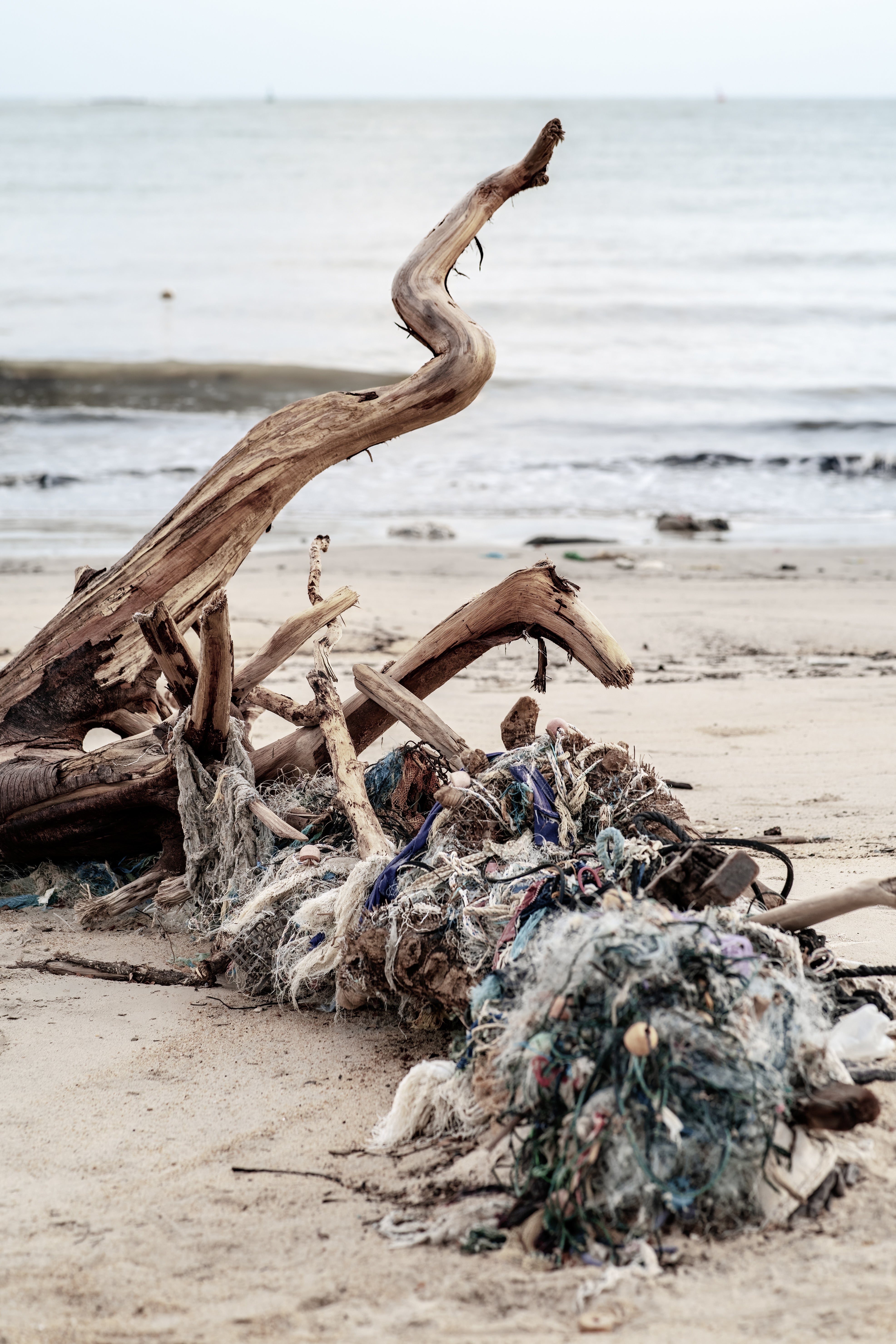
The simplest path in 3D printing is to use virgin plastic. It‘s cheaper, faster and more predictable. We don‘t take it. Instead, we work with materials that already lived a life, because adding new plastic to the world felt like the wrong answer. Materials are chosen for performance, longevity, and consequence: idustrial waste diverted from landfills, bottles that would otherwise be crushed and forgotten, Fishing nets pulled from the ocean.
PA6 from recycled fishing nets
PA6 from recycled fishing nets
Our primary material. PA6 nylon recovered from end-of-life fishing nets, processed into filament through Circular Ocean Project. Warps easily. Prints slowly. Worth it. Each lamp uses.
rPETG from post-consumer plastic bottles
rPETG from post-consumer plastic bottles
We are currently testing ways to turn post-consumer plastic bottles directly into usable filament for 3D printing. The goal is to reduce unnecessary intermediate steps and better understand what it takes to give everyday waste a second life, right where it’s made.
Material composition
Material composition
Some products will explore material combinations from, where surface, light, or function require it. PA6 is then combines with rPLA - offcuts and rejected parts from manufacturing facilities. Reground, remelted, reformed. Lighter than PA6. Easier to print. Still keeps perfectly good material in circulation.
Material development
Looking ahead, we aim to work with U.S. manufacturers to develop traceable recycled filaments, so so real waste materials become accessible to the wider 3D-printing community.
We value exchange with people and brands who think along similar lines - manufacturers, makers, designers, and independent studios - to learn, test, and move things forward together. That can mean sharing materials, organizing beach cleanups, exchanging waste streams so each of us can turn what we have into something meaningful, or simply contributing knowledge and experience. For us, collaboration is about shared curiosity, mutual respect, and a willingness to change things step by step, together.
If you’re working with recycled materials or interested in developing traceable filaments with us, we’d love to exchange ideas.

Our own waste
Reclaimed materials behave differently batch to batch. They demand precision, patience, and a willingness to fail before things work. We accept that friction because it allows us to build objects that are intentional, durable, and grounded in reality. Each lamp is made to order in our Fort Lauderdale studio, printed layer by layer with careful control over temperature, speed, and cooling. The result is not uniform perfection, but subtle variation, traces of process rather than flaws to hide.
When we make mistakes - and we do - that material doesn‘t leave. Failed prints, support structures, test pieces. We shred them, melt them, reform them. Through injection molding, our waste becomes components for the next batch. Nothing is disposable here.

Beyond 3D printing
Alongside additive manufacturing, injection molding plays a central role in how we think about material cycles. It allows us to work directly with reclaimed fishing nets and other waste materials without converting them into filament first.
By melting and forming material directly, injection molding removes an entire intermediate step. This makes it possible to work with a wider range of waste streams, reduce complexity, and keep material integrity intact. It also makes reuse more accessible, more economical, and more transparent.
For Mocamar, injection molding is essential to The Loop. It enables materials that cannot (yet) be reprinted to return in another form, as purposeful objects. Different process, same principle: nothing is treated as disposable, and no material is lost simply because it doesn’t fit a single method.
3D printing gives us freedom, iteration, and flexibility. Injection molding gives us continuity and depth in material reuse. Together, they allow us to think beyond individual products and toward systems that can evolve over time.
Limits.
We are not carbon neutral. Shipping has a footprint. 3D printing uses energy. Electronics aren’t infinitely recyclable. We don’t offset these realities with claims. We focus on what we can control - material choice, cascade use, and keeping resources in circulation as long as possible. This isn’t a finished solution. It's a process we stay accountable to.
We share this process openly: what works, what doesn’t, and what we’re still learning. If you want to follow along, leave your email below.